Call Anytime
0521345355
Call Anytime
0521345355

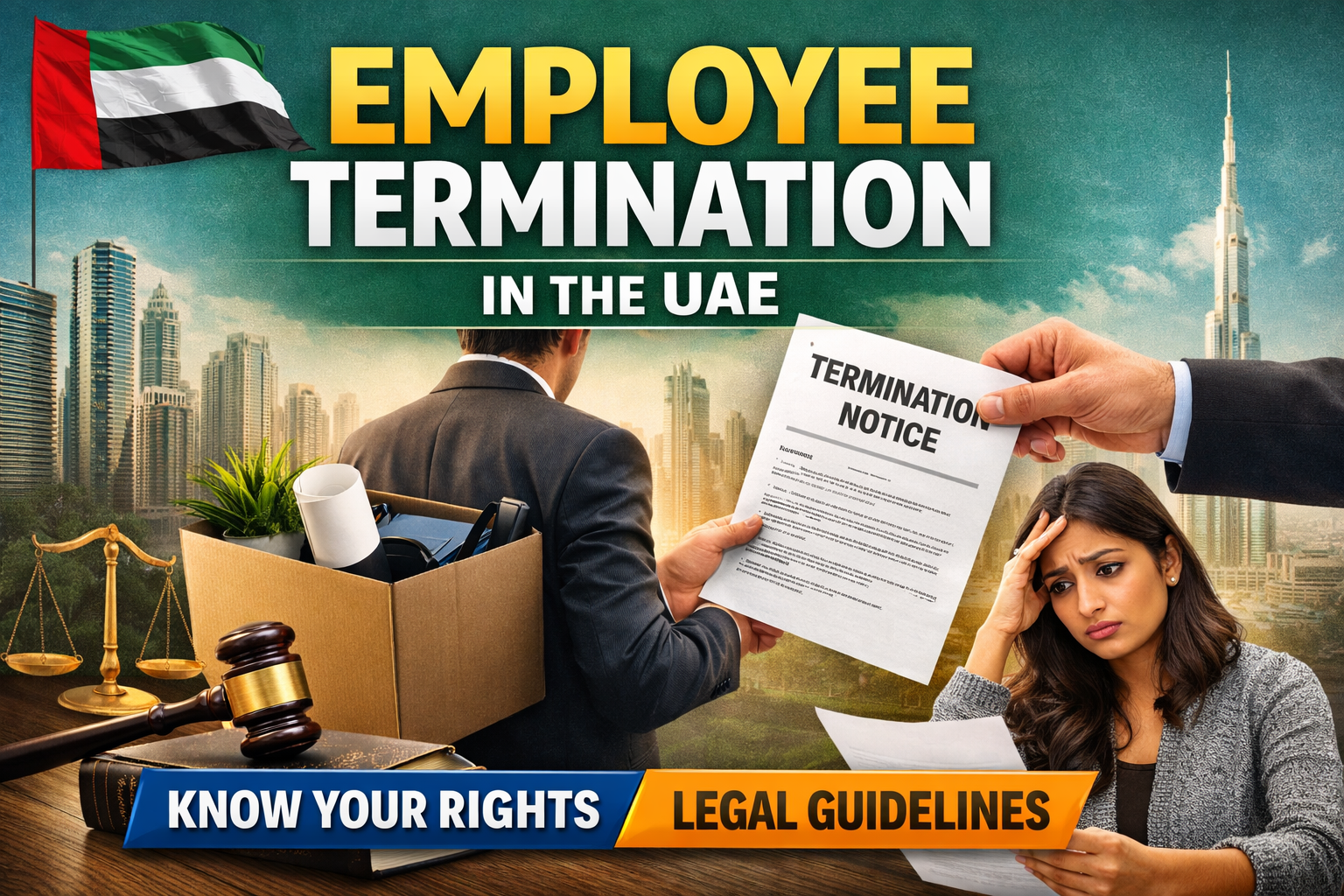
Termination of employment contracts in the UAE is governed by Federal Decree-Law No. 33 of 2021 Regarding the Regulation of Employment Relationships and related regulations. Both employers and employees must follow defined legal steps to ensure fairness and avoid disputes.
Whether you’re an employer looking to terminate a contract — or a worker who wants to understand your rights — this blog breaks down the rules, procedures, and best practices.
🧾 1. Types of Contract Termination
Employment in the UAE may end in several ways:
🔹 a) Expiry of Contract
When a fixed-term contract reaches its end date, it terminates automatically unless renewed.
🔹 b) Termination by Employer
The employer can end the employment contract — with notice or in exceptional cases without notice — but must follow legal requirements.
🔹 c) Termination by Employee
Employees can resign by giving notice as per contract terms.
📌 2. Notice Period Requirements
Notice periods are fundamental and legally required unless an exception applies:
✔ Standard Contracts
Employers must provide written notice, usually 30 to 90 days (as per Article 43) — the exact length is typically set in the employment contract.
✔ Probation Period (First Six Months)
Employers may terminate employment during probation by providing at least 14 days’ written notice.
✔ Without Notice in Serious Misconduct
An employer may dismiss without notice only after a formal written investigation and documentation (e.g., repeated serious performance failure after warnings).
❗ Important: Always document notices and investigation records — verbal communication alone is not legally valid.
📍 3. Valid Grounds for Termination
Employers should base termination on lawful grounds to avoid legal claims:
✅ Lawful Reasons
Contract expiry or mutual agreement.
Documented poor performance or misconduct (with warnings and investigation).
Redundancy (e.g., restructuring, business changes).
⚠ Illegal or Arbitrary Termination
It’s unlawful to dismiss an employee for reasons like:
Filing a complaint to the Ministry or workplace grievance action.
Discrimination (e.g., related to health, pregnancy or protected status).
Other arbitrary motives unconnected to work or performance.
If unlawful termination is proven, the employer may be obliged to pay compensation (capped at three months’ wages) plus end-of-service benefits.
📝 4. Step-by-Step Employer Procedure for Terminating an Employee
Follow these steps to legally and safely terminate an employee:
Step 1: Review the Employment Contract
Check the notice period clause, job terms, and any probation provisions.
Step 2: Determine the Reason for Termination
Ensure it’s lawful and backed by evidence (performance reports, disciplinary records).
Step 3: Conduct a Written Investigation (if needed)
If performance or conduct is an issue:
Issue warnings
Document conversations
Provide a chance for improvement
Step 4: Prepare a Written Termination Notice
The notice must include:
Reason for termination (especially outside probation)
Notice period length
Effective termination date
Step 5: Deliver Notice Properly
Issue the written notice directly and keep a signed copy for your records.
Step 6: Calculate Final Dues
Settlement should include:
Salary up to last working day
Pay for unused annual leave
Notice period salary
End-of-service gratuity (if applicable)
Step 7: Cancel Work Permit & Visa
Follow MOHRE and GDRFA procedures for labour and visa cancellation if the employee is expatriate.
Step 8: Issue Certificate of Experience
At the employee’s request, provide a certificate including:
Dates of employment
Job title
Last salary
Reason for leaving (not harming reputation)
🤝 5. Employee Rights After Termination
Employees in the UAE are protected and have these important rights:
✔ Receipt of final dues and notice pay.
✔ End-of-service gratuity after one year of service.
✔ Right to file a complaint with MOHRE if they believe termination is unlawful.
✔ Protection against closure retaliation (e.g., firing after filing a complaint).
⚠ Common Mistakes to Avoid
| Mistake | Consequence |
|---|---|
| No written notice | Potential legal claim |
| No documentation of performance issues | Dismissal may be deemed unlawful |
| Terminating for protected reasons | Financial penalties and compensation |
| Ignoring end-of-service benefits | Labour complaint or court action |
Being proactive and legally compliant reduces disputes and enhances business reputation.
🧑⚖️ Legal Recourse and Precautions
For Employers:
✔ Keep records (contract, warnings, notices).
✔ Use clear, documented communication.
✔ Ensure termination is lawful and justified.
For Employees:
✔ Ask for written confirmation of reasons.
✔ Request final settlement breakdown.
✔ File a MOHRE complaint within legal deadlines (often up to 2 years after entitlements become due).
📌 Final Takeaways
UAE employment law balances employer flexibility with employee protection. Whether you’re running a business or working under a contract, following procedures and documentation is key to avoiding disputes and ensuring rights are respected.