- info@tabdc.ae
- ARZOO BUILDING - Al Qusais - Dubai
- Mon _ Sat: 9.00 AM to 9.00 PM
 Call Anytime
0521345355
Call Anytime
0521345355

13
Jan
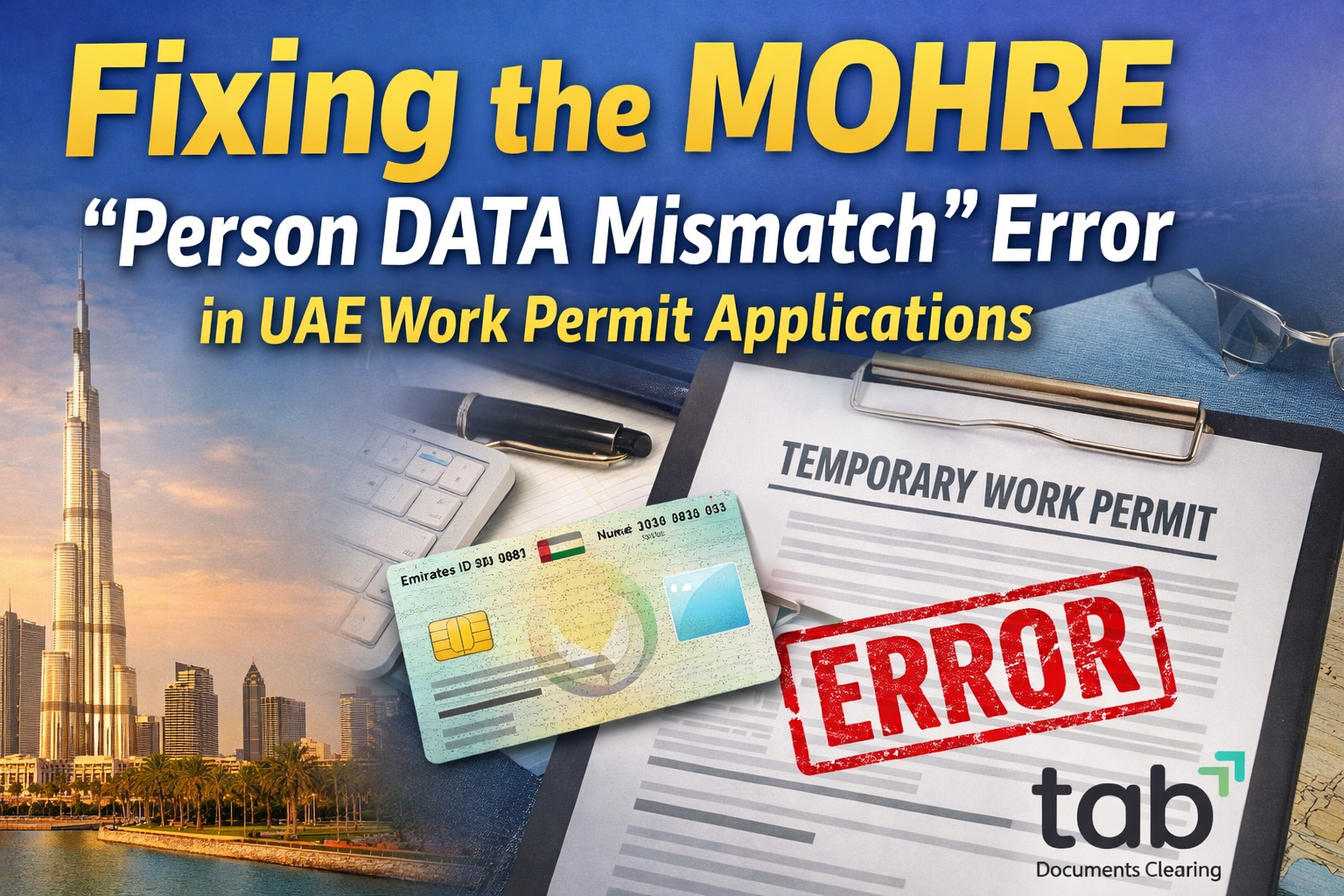
Temporary Work Permit UAE: How to Fix MOHRE “Person DATA Mismatch” Error (Emirates ID Update Required)
Temporary Work Permit in the UAE: Resolving MOHRE “Person DATA Mismatch” Errors and Ensuring Smooth Labor Processing
The United Arab Emirates continues to refine and digitalize its labor, residency, and immigration frameworks to improve transparency, efficiency, and employer compliance. Among these developments, the Temporary Work Permit (TWP) offered by MOHRE (Ministry of Human Resources and Emiratisation) remains an essential tool for companies requiring short-term labor flexibility. Whether for project-specific assignments, part-time technical work, training, or internal transfers, the Temporary Work Permit enables employers to engage individuals legally without modifying long-term employment contracts.
However, as with many digital systems involving multiple government databases, applicants and PROs occasionally encounter system-level errors. One of the most persistent and confusing among these is the “Person DATA Mismatch” error. This system-generated message can block or delay the Temporary Work Permit submission entirely, causing operational setbacks for companies on strict timelines.
This in-depth guide outlines what the error means, why it appears, how to resolve it efficiently, and how organizations can prevent similar issues. It also provides insights into how specialized PRO and immigration services can streamline the UAE labor permit process for companies and individuals.
Understanding the Temporary Work Permit in the UAE
The Temporary Work Permit (TWP) is a regulatory mechanism that allows companies registered under MOHRE to engage workers temporarily without transferring sponsorship or modifying their existing visa structure. TWPs are used in several scenarios, including:
- Project-based manpower needs
- Technical or contractual assignments
- Skill-specific or specialist tasks
- Internal movement within corporate structures
- Short-term industry projects
- Consultancy or advisory engagements
- Training, testing, and qualification tasks
TWPs play a strategic role in sectors such as construction, industrial services, facilities management, consulting, technology, logistics, and events — industries where project cycles may not align with long-term contracts.
The permit is issued under MOHRE and interlinks with other UAE government systems including ICP (Identity and Citizenship), Immigration, and labor records. This interconnected digital infrastructure enhances regulatory oversight but also increases dependency on synchronized personal identity data — which is where the Person DATA Mismatch problem arises.
Why the MOHRE “Person DATA Mismatch” Error Appears
The Person DATA Mismatch error indicates that MOHRE’s system is trying to verify the worker’s identity using stored data, but the result does not match the current official identity data registered under the Emirates ID (EID) or ICP system. In most cases, the mismatch is not due to an error during the current submission. Instead, it stems from outdated identity records held by MOHRE.
The most common root cause is simple:
The Emirates ID has been updated, renewed, or corrected — but MOHRE was not updated accordingly.
Identity information often changes in the following scenarios:
- Emirates ID renewal
- Visa renewal or stamping
- Passport renewal with different spelling or details
- Personal corrections (name, birthdate, nationality, etc.)
- New Emirates ID issuance after residency changes
- ICP updates not shared across integrated systems
Because the UAE uses cross-government verification for labor procedures, the Temporary Work Permit system halts if identity fields do not align.
Why Emirates ID Synchronization Matters to Labor Processing
The Emirates ID is the UAE’s primary identity credential for residents and citizens. It replaces older reliance on passport data for most public sector interactions and serves as the anchor for:
- Visa and residency status
- ICP identity profiles
- Labor contracts and amendments
- Employment permits
- Financial services (banking, telecommunication, utilities)
- Health insurance enrollment
- Digital identity authentication
MOHRE increasingly requires exact data matches across these systems for compliance. Any discrepancy — even in formatting or spelling — can trigger validation blocks.
Case Example: Person DATA Mismatch During Temporary Work Permit Submission
A UAE-based firm attempted to submit a Temporary Work Permit for a skilled technician needed for a short-term industrial project. Despite supplying correct information, the system repeatedly generated a “Person DATA Mismatch” error. Upon review, the employee’s Emirates ID had been recently renewed, adjusting the format and updating nationality data via ICP. However, MOHRE’s records still reflected the older Emirates ID.
By submitting a Person Modify Application, updating MOHRE’s identity record, and waiting for approval, the firm was able to reapply successfully without further errors. The total delay was reduced to two working days because the issue was identified early.
For companies operating on tight project schedules, even minor administrative delays can lead to contractual penalties or client disruptions, underscoring the need for proactive PRO oversight.
How to Fix the Person DATA Mismatch Error
Fortunately, resolving the issue is straightforward once identified. The fix involves a synchronization step between the Emirates ID and MOHRE.
Step 1: Submit a Person Modify Application via MOHRE
This application instructs MOHRE to refresh and realign identity records using the most current Emirates ID and ICP data.
Step 2: Wait for MOHRE Review and Approval
Once approved, MOHRE updates its system with the correct identity information. Processing times vary depending on volume and document accuracy.
Step 3: Reapply for the Temporary Work Permit
After synchronization, the Temporary Work Permit application proceeds normally without system rejection.
Companies that routinely process labor applications often build this step into onboarding procedures to minimize disruptions.
Impacts of Ignoring Data Synchronization
Failing to address identity mismatches can affect more than just Temporary Work Permits. Companies may encounter disruptions in:
- Labor contract amendments
- Absconding cancelations
- Work permit cancellations
- Labour transfer requests
- Offer letter issuance
- Wage Protection (WPS) updates
- Renewal of labor cards
- Visa renewal for employees
Because identity data serves as the foundation of UAE labor compliance, errors cascade across procedures if left unresolved.
Prevention through Structured PRO & Compliance Practices
The most effective way to prevent Person DATA Mismatch errors is implementing proactive data verification measures. Recommended best practices include:
- Checking Emirates ID updates following renewals
- Aligning ICP and MOHRE data before permit submissions
- Logging identity data variations at onboarding
- Auditing employee identity data before major labor cycles
- Maintaining centralized HR/PRO data repository
- Partnering with professional PRO service providers for compliance
Companies with high labor volume — such as construction and industrial sectors — benefit most from structured workflows due to frequency of renewals and permit changes.
Role of PRO and Visa Services in Avoiding Labor Delays
Businesses often underestimate how administrative procedures influence commercial operations. Professional PRO service providers help companies navigate complexities such as:
- MOHRE and ICP data synchronization
- Temporary Work Permit submissions
- Contract processing and amendments
- Visa renewals and stamping procedures
- Emirates ID issuance and renewal
- Change of status processes
- Compliance and regulatory updates
These functions ensure businesses maintain operational continuity without diverting internal resources.
Frequently Asked Questions (Expanded SEO FAQ)
What does the Person DATA Mismatch error mean?
It indicates that MOHRE identity records do not match the current Emirates ID or ICP data.
Is this error related to Emirates ID renewal?
Most of the time, yes. Renewals are the most common source of data mismatches.
Can I bypass the error and submit the Temporary Work Permit anyway?
No. The system blocks the application until the data aligns across systems.
Does passport renewal trigger the mismatch?
Yes, especially if nationality, spelling, or birthdate adjustments were made.
How long does MOHRE take to approve a Person Modify application?
Timelines vary, but approvals typically occur within a few working days, depending on workload and documentation.
Is this error unique to Temporary Work Permits?
No. It can also affect transfers, cancellations, amendments, and contract processing.
Can companies avoid this through internal PRO teams?
Yes, but proactive data checks and system familiarity are critical.
Do UAE labor regulations require exact identity matches?
Yes. Exact identity matching enables compliance and reduces fraud risk.
Conclusion: Addressing Identity Data Early Ensures Faster Labor Processing
The “Person DATA Mismatch” error indicates an outdated identity synchronization between the Emirates ID, ICP, and MOHRE. While the issue appears technical, the solution is straightforward: update the records through a Person Modify Application and resubmit. Companies that adopt proactive verification save time, reduce risk, and maintain compliance throughout the employee lifecycle.
For businesses managing multiple employees or high labor turnover, partnering with experienced PRO and visa processing service providers helps ensure that procedures such as Temporary Work Permits, renewals, and contract amendments run smoothly without avoidable delays.